Mostrando entradas con la etiqueta Hombre / Menswear. Mostrar todas las entradas

domingo, 22 de enero de 2012

Ruffles a.k.a. Engageantes

Robe à la française, detail, 2011, by this wonderful blogger.

Para nosotros hoy en día los puños no son una parte importante de nuestros outfits del día a día, básicamente porque éstos puños están fijos a las mangas de nuestras prendas, pero durante el siglo XVIII los puños de holanes llamados "engageantes" (en francés) o "ruffles" (en inglés) eran un accesorio de todos los días para cualquier persona que se considerara con estilo, siendo usado igual por hombres y mujeres.
Usualmente estaban hechos de muselina, tira bordada o encaje, y tenían forma circular, de medio círculo o de una tira irregular que era fruncida y fijada a la manga a mano. Durante todo el siglo, la forma, tamaño, longitud y número de holanes cambió dependiendo la moda del momento. Éstos puños podían estar formados de una o hasta tres capas de tela.
Se dejaron de usar en algún momento al rededor de 1865.

For us nowadays cuffs are not an important part of our everyday outfit, basically because the cuffs are attached to the garment, but back in the 18th century the sleeve ruffles (or simply called "ruffles" in english) or "engageantes" (in french) were an everyday accessory for the fashionable wearer (man or woman).
They were usually made of muslin, whitework embroidery, broderie anglaise or lace and have the shape of a circle, half circle or an irregular line, and was draped to fit the sleeve to which was attached by hand.
During the century the shape, size, length and number of ruffles changed accoding to fashion and they could have a single simple layer or go up to three.
They ceased to be worn about 1865.
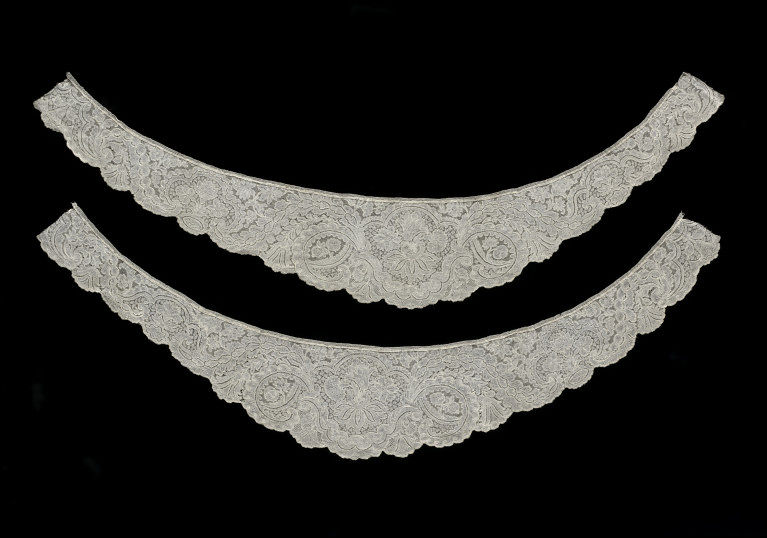
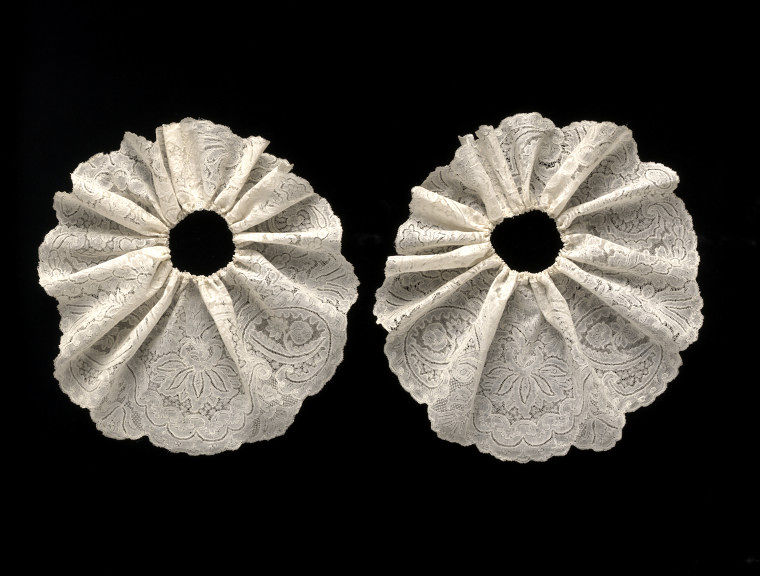
Ruffles made in Mechelen, ca. 1750. Victoria & Albert Museum.
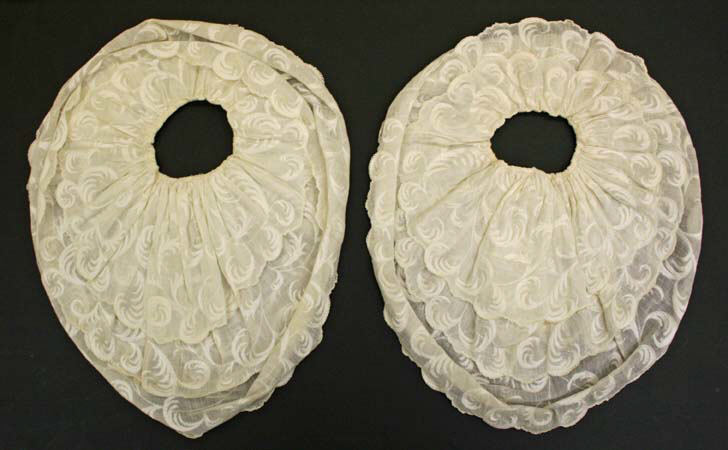
European ruffles, 1750-1775. Metropolitan Museum of Art.
Ralph Finnes and Keira Knightley in the 2008 film "The Duchess" (clic for bigger)

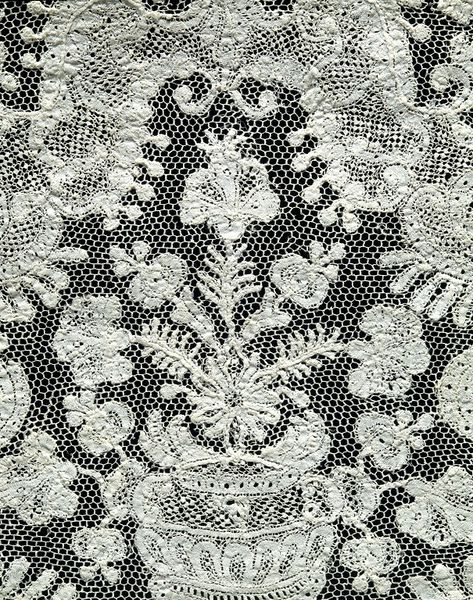
Lace ruffle detail, made in Brussels ca. 1700. Victoria & Albert Museum.
"Lord Halifax and his Secretaries" by Daniel Gardner.
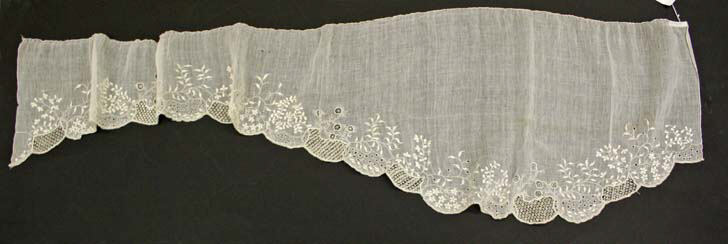
British ruffle made ca. 1765. Metropolitan Museum of Art.

Fuentes / Sources:

miércoles, 25 de mayo de 2011

Golden Times

Ok, he vuelto. Al final creo que no haré una tesis de verdad para graduarme, pero como sea quiero seguir con la investigación sobre... bueno, cosas del siglo XVIII. Hoy debo confesar que había olvidado ésta colección y los maravillosos anuncios de Dolce&Gabbana inspirados en la era rococó y regencia.

Well, I'm back. At the end I think I'm not gonna make an actual thesis, but anyway I will continue with my investigation on.... well, 18th century stuff. This time I've got to confess I had forgotten this gorgeous collections and the marvelous ads from Dolce&Gabbana inspired by the rococo and regency eras.

Dolce&Gabbana Ad Campaign
Autum - Winter 2006
Photography Steven Meisel (who else?!)
Models Gemma Ward, Julia Stegner, Iselin Steiro, Snejana Onopka, Ines Crnokrak, Coco Rocha, Lily Donaldson, Morgane Dubled, Caitriona Balfe, Chad Dunn, Cosmin Petre, David Gandy, Terron Wood, and Sam Saffman


domingo, 26 de septiembre de 2010

shoes, shoes, SHOES! / ¡¡ZAPATOS!!

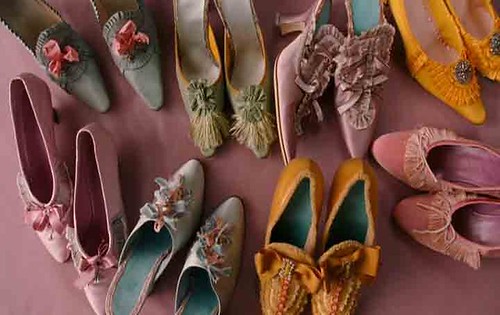
Shoes by Manolo Blahnik for the  Sofia Coppola's film Marie Antoinette, 2006 
Zapatos diseñados por Manolo Blahnik para el filme Marie Antoinette de Sofia Coppola, 2006

What kind of girl does not love shoes? They're pretty AND wearable... Men: do never say the contrary, we just love'em, and the girls AND boys from the 18th century loved them too.

¿Qué clase de chica no le encantan los zapatos? Son lindos y los puedes usar... Hombres: nunca digan lo contrario, nosotras simplemente los amamos; y las chicas y chicos del siglo XVIII los amaban también.

1. Blue silk and leather, Italy, late18th early 19th century / Seda azul y piel, Italia, finales del siglo XVIII principios del XIX
2. Leather boots, Europe, 1795-1810 / Botas de piel, Europa, 1795-1810
3. Leather, metal buckle, Europe, late 18th century / Piel y hebilla metálica, Europa, finales del siglo XVIII
4. Silk, linen and  leather slippers, Europe, early 18th century / Mules de seda, lino y piel, Europa, principios del siglo XVIII
1. Green silk, Italy, 18th century / Seda verde, Italia, Siglo XVIII
2. Embroidered silk, Great Britain, Early 18th century / Seda bordada, Gran Bretaña, Principios del siglo XVIII
3. Silk and leather, Great Britain, 18th century / Seda y piel, Gran Bretaña, Principios del siglo XVIII
4. Silk shoes by Thomas Ridout, Great Britain, 1750-1770 / Zapatos de seda por Thomas Ridout, Gran Bretaña, 1750-1770
Leather Shoes, Great Britain, 1795-1805 / Zapatos de piel, Gran Bretaña, 1795-1805
1. Yellow wool, Norwich, England, 1720's-1730's / Lana amarilla, Norwich, Inglaterra, 1720's-1730's
2.  Green silk, Great Britain, 1730-1755 / Seda verde, Gran Bretaña, 1730-1755
3. Red leather child shoe, Europe, late 18th century / Zapato de niño en piel roja, Europa, finales de siglo XVIII
1. Black leather man court shoes, France, 1780-1800 / Zapatos de corte masculinos en piel negra, Francia, 1780-1800
2. Green silk satin, England, 1710 / Satín de seda verde, Inglaterra 1710
3. Beige silk shoes embroidered with metallic cord, Great Britain, 1690-1729 / Zapatos de seda beige bordaods con hilo metálico, Gran Bretaña, 1690-1729
4. Brown leather, England, ca. 1700 / Piel café, Inglaterra, ca. 1700
La poussière de Vaux le Vicomte..., 2008, by Lisotchka, via Flickr.com

Fuentes / Sources:
The Metropolitan Museum of Art, The Costume Institute, NY
The Victoria And Albert Museum, London